


8 Fun Career Exploration Activities for Elementary Students
What do you want to be when you grow up?
It's a question children hear all the time, and the answers can be pretty entertaining! One day, they might dream of becoming a veterinarian, and the next, they're convinced they'd make an excellent astronaut, firefighter, or professional ice cream taste-tester.
That's why I love a good career exploration activity! Introducing elementary students to different jobs and professions is a wonderful way to encourage curiosity, help children discover their interests, and show them how the skills they're learning today can be used in the real world.
And no, we're not suggesting that your second grader needs to start planning their career path just yet! The goal of career exploration for kids is simply to introduce them to new possibilities and help them understand the many different ways people contribute to their communities.
Whether you're a homeschool parent looking for enrichment activities or a classroom teacher planning a career exploration unit, these fun career activities for kids are a great place to start!
8 Fun Career Exploration Activities for Elementary Students
Here are ten career exploration activities for elementary students that encourage children to ask questions, explore new interests, and learn more about the world around them.
1. Introduce a "Career of the Week"
One of the easiest ways to introduce children to different professions is to explore one new career each week!
Choose a profession and spend a little time learning about what that person does, where they work, what tools they use, and what skills they need to be successful. For example, you might spend one week learning about veterinarians. Children can explore the responsibilities of a veterinarian, learn about the different animals they care for, and discover the equipment used in an animal clinic.
The following week, you might explore the work of an architect, marine biologist, photographer, or meteorologist.
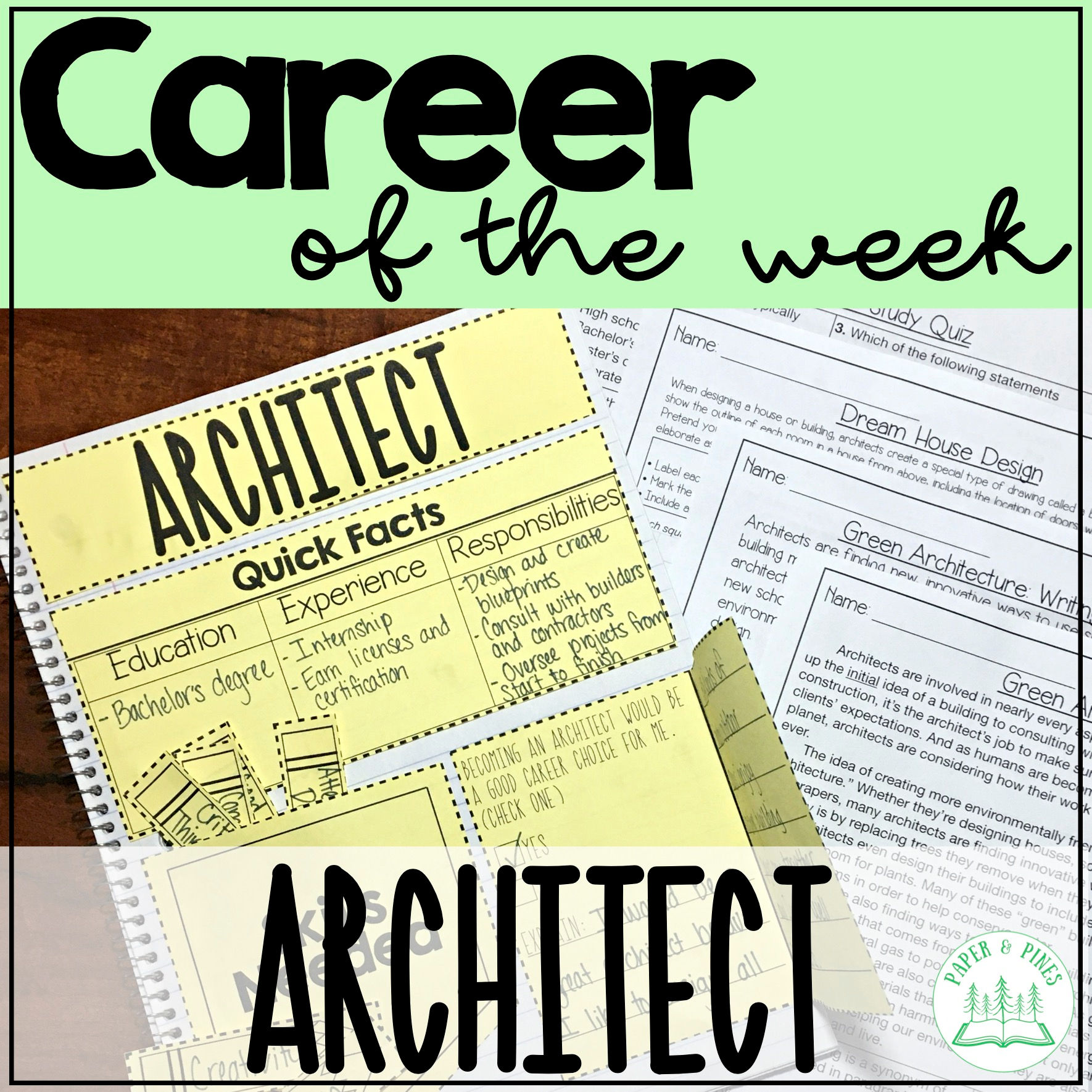
Our Career of the Week activities are a simple way to introduce elementary students to different professions through engaging, age-appropriate activities. There are 40 careers total in the bundle, or you can pick and choose which individual careers you download.
Each of the Career of the Week activities are designed to take approximately 15-30 minutes:
Day One - Mini-lesson & interactive notebook activity (teacher’s guide included)
Day Two - Reading comprehension passage with four multiple-choice questions
Day Three - Writing prompt
Day Four - STEAM extension
Day Five - Short quiz & reflection
They're a great addition to classroom lessons, homeschool schedules, or independent learning time!

2. Have a Career Dress-Up Day
Sometimes, the best way to learn about a profession is to pretend you're doing the job yourself!
Choose a career and encourage children to dress up as someone working in that profession. They might wear a lab coat and carry a pretend stethoscope as a doctor, put on a firefighter's helmet, or grab a mixing spoon and apron to become a chef.
Once everyone is dressed up, give children an opportunity to introduce their chosen profession:
What does this person do?
Where do they work?
What tools do they use throughout the day?
You can even turn this into a small presentation where children explain why they chose their profession and what they find interesting about it.
If you want to expand the activity for younger kids, consider adding a few occupational pretend-play kits to your collection. Doctor kits, veterinarian sets, construction tools, and toy cooking supplies can all encourage imaginative play while helping children explore different jobs.
3. Play a Career Guessing Game
Here's a fun activity that requires almost no preparation!
Describe a profession without telling children what it is, and see if they can guess the job based on your clues.
For example:
I help people when they're sick or injured.
I work in a hospital or medical office.
I use a stethoscope to listen to people's hearts.
I might prescribe medicine to help someone feel better.
Can you guess the profession? That's right, a doctor!
You can make the game more challenging by choosing less familiar professions. Try describing an archaeologist, zoologist, civil engineer, or landscape architect. This would be a great activity after finishing the Career of the Week series!
Once children understand how the game works, let them take turns describing different professions for everyone else to guess.
Career flashcards can be a helpful addition to this activity, especially for younger children who are still learning about different jobs and their responsibilities.


4. Explore the Tools and Equipment People Use at Work
Every profession has its own collection of tools and equipment, and exploring these items can be a great way to introduce children to different careers.
Start by choosing a few professions and looking at pictures of the tools people use in their daily work. A veterinarian might use a stethoscope, thermometer, and examination table. A construction worker might use a hard hat, measuring tape, and power tools. A scientist might use a microscope, test tubes, and laboratory equipment. Ask children to match each tool to the profession that uses it.
You can also turn this into a hands-on activity by gathering safe, everyday objects and asking children to identify the careers associated with them.
For example, bring out a paintbrush, measuring tape, gardening gloves, and magnifying glass. Ask: What kinds of professionals might use these items?
This is also a great opportunity to introduce children to some new vocabulary and discuss why certain tools are important for specific jobs!
5. Interview a Professional
One of the best ways to learn about a career is to talk to someone who actually does the job! Invite a family member, friend, or community member to share a little about their profession. This could be a teacher, nurse, farmer, artist, engineer, electrician, or anyone willing to answer a few questions.
Before the interview, have children brainstorm questions they'd like to ask.
Some ideas include:
What do you do during a typical workday?
What is your favorite part of your job?
What is the most challenging part of your work?
What tools or equipment do you use?
What kind of education or training did you need?
What advice would you give someone interested in your profession?
For younger children, you might want to prepare a simple interview worksheet with space to record a few answers or draw a picture of the person at work. If an in-person interview isn't possible, try setting up a video call!
6. Complete a Career Research Project
For children who are ready to explore a profession in a little more detail, a career research project is a wonderful learning opportunity. Have each student choose a profession that interests them. Then, encourage them to research the responsibilities, workplace, education requirements, and skills associated with that job.
Once they've gathered their information, they can create a poster, mini-book, or simple presentation to share what they've learned.
For younger elementary students, keep the project simple. They might answer a few basic questions and illustrate what someone in that profession does. Older students can explore more detailed topics, such as the education required for a particular career, typical work environments, and how the profession has changed over time.
This activity is especially useful because it combines career exploration with reading comprehension, research skills, writing, and presentation practice.
A few basic supplies, such as poster board, markers, colored pencils, and nonfiction books about different professions, can help bring these projects to life!


7. Match Careers to Their Workplaces
Where does a marine biologist work? What about a pharmacist, architect, or farmer?
Understanding where different professionals work is another fun way to introduce children to different jobs and occupations.
Start by showing children pictures of several workplaces. You might include a hospital, farm, construction site, laboratory, school, restaurant, and art studio.
Then, provide a list of professions and ask children to match each one to a likely workplace.
You can make the activity more interesting by discussing careers that don't fit neatly into one location.
For example, a photographer might work in a studio, outdoors, or at special events. An environmental scientist might spend time in a laboratory and out in the field. This is a simple way to show children that there are many different work environments and that some professions offer opportunities to work in several settings.
8. Go on a Community Helpers Scavenger Hunt
Children interact with people working in different professions every day, but they don't always recognize just how many people help keep their communities running!
A community helpers scavenger hunt is a fun way to introduce children to the different jobs and occupations they might encounter in their neighborhoods.
Start by creating a list of community helpers for children to look for. Depending on where you live, you might include:
Mail carriers
Firefighters
Police officers
Librarians
Farmers
Sanitation workers
Nurses
Teachers
Construction workers
Veterinarians
Take a walk around your neighborhood or explore a nearby town. How many of these professionals can you spot? You can also discuss what each person does and how their work helps the community.
If you live somewhere that makes it difficult to observe certain professions in person, use picture books and educational videos to introduce kids to different community helpers.
Encourage Kids to Explore Their Possibilities
True, children don't need to know what they want to be when they grow up. They just need opportunities to discover what's possible!
There are so many ways to introduce elementary students to the world of work. And who knows? A child who has never heard of a botanist might discover a love of plants and decide to learn more about the natural world. Another might discover an interest in architecture after creating their own blueprints
Looking for an easy way to introduce new professions into your homeschool or classroom? Explore our Career of the Week resources for engaging activities that help elementary students learn about different jobs, occupations, and the people who make our world a more interesting place!


Comments