


Pancake Science: A Hands-On Physical Science Review Activity
Looking for a fun, low-prep way to review key physical science concepts? Grab some pancake mix! This simple cooking demonstration has always been one of our favorite activities, and it’s a memorable way to reinforce lessons on conductors and insulators, mixtures and solutions, and states of matter.
Why Pancakes Make the Perfect Physical Science Review
As we neared the end of our physical science unit, I wanted to create a review that would bring everything together. Something engaging, sensory, and hands-on. The idea didn’t click until I saw some instant shake-and-pour pancake mix at the grocery store. That’s when it hit me: we could review nearly every concept by making pancakes right in the classroom!
This post contains affiliate links, which means I may earn a small commission at no extra cost to you if you choose to purchase through my links. I only recommend products we use and love!
Setting Up the Activity
Prepping for this science demonstration is simple. I already had most of the materials, and I borrowed a hot plate from the school. If you don’t have one, you can probably find one in your science lab or borrow from another teacher or friend. If you’d like to have one to keep on hand, this one is a simple, low-cost option!

Materials Needed
Instant pancake mix (the shake-and-pour kind)
Water
Metal and plastic spatulas
Hot plate or electric skillet (a waffle maker works too!)
Mixing bottle
Cooking spray
Handouts for student observations
Once everything is set up, preheat your pan before class starts. Having the pan hot and ready keeps the lesson moving; your pancakes will cook quickly and your students will stay focused. The whole activity takes about 45 minutes from start to finish.
Lesson 1: Conductors and Insulators
As the pan heats up, begin with a quick review of conductors and insulators of heat and electricity.
Compare your metal vs. plastic spatulas. Students can feel how the metal handle warms up as it sits in the pan.
Discuss the pan material and handle design, and how these affect heat transfer.
Use the hot plate to talk about electrical conductors and insulators, pointing out the wires and which parts carry electricity safely.
Lesson 2: Mixtures and Solutions
Next, bring students’ attention to the pancake mix itself.
Observe the dry ingredients and identify them as a mixture: different substances combined.
Add water and shake the bottle. Students can predict and observe what happens next: some ingredients begin to dissolve, creating a solution.
As they shake, they’ll notice a buildup of pressure, which is a great transition into discussing physical vs. chemical changes.
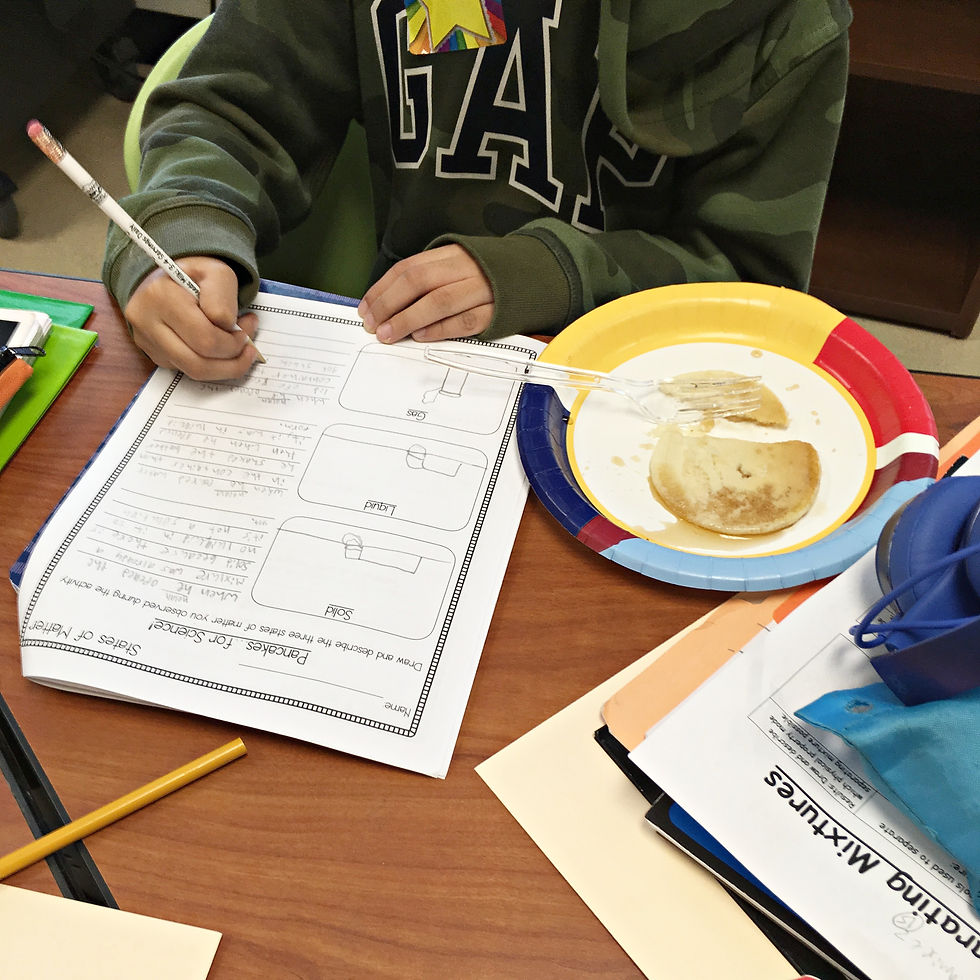
Lesson 3: States of Matter (Solid, Liquid, and Gas)
Now comes the cooking! Pour small pancakes (2–3 inches) onto the preheated pan.
Point out that the pancake mix starts as a solid mixture, and the water is a liquid.
Once mixed, the batter becomes a liquid solution.
As the pancakes cook, bubbles form on the surface. This is liquid water evaporating into gas as it heats up.
Students can watch the batter transform from a liquid to a solid as the water evaporates.
I call up small groups at a time to observe the changes up close before sending them back with a pancake to enjoy (don’t forget the syrup!)

Tips for a Smooth and Safe Classroom Cooking Demo
This can easily be done at home and in a regular classroom (no science lab required!). A few tips to help:
Discuss each concept while cooking to keep everyone engaged.
Bring small groups to observe as pancakes cook, then send them back to enjoy.
Use our student handouts so they can record observations while they wait.
Keep pancakes small so you can cook several at once.
Re-shake the bottle every few pours to keep the batter mixed.
Monitor the pan temperature so it stays hot and efficient.
Always supervise closely around the hot plate and pan.
Send extra pancakes to your teacher friends down the hall. They’ll thank you!
Optional Variation: Waffle Maker Version
If you don’t have access to a hot plate, a waffle maker works just as well! Students won’t see the same bubbles that indicate gas release, but they can still observe steam escaping from the sides as water turns into vapor.
Why This Activity Works
I’ve done this pancake science review every year, and it never fails. It’s simple, memorable, and hits three major science goals:
Understanding conductors and insulators
Identifying mixtures and solutions
Observing states of matter in real time
It’s the perfect way to bring physical science concepts to life and your classroom will smell amazing while you do it!
Grab the Printable Student Handout
Make this lesson even easier to run with our ready-to-use Physical Science Review Activity. It includes student worksheets, observation prompts, and review questions that tie directly to the NGSS standards and science TEKS for upper-elementary grades.


Comments