


Teaching Revision Skills: Hands-On Revising and Editing Practice Ideas
- paperandpines
- Nov 7, 2025
- 4 min read
One common misconception among kids is that revising just means to correct errors in a piece of writing. Many young writers haven’t yet learned what it really means to rework a paragraph: to add, move, or remove sentences so their ideas flow more clearly.
And when students start seeing how small changes improve their writing, they become more confident, thoughtful writers. Let’s look at a few simple, hands-on ways to teach students how to revise paragraphs with intention!
Start with the Big Picture: What Does It Mean to Revise?
Before diving into detailed edits, help students understand that revising is about making writing stronger, not just correcting errors.
I like to explain it this way: Editing is fixing what’s wrong. Revising is improving what’s already there. Once they get that, they’re ready to tackle three big revision moves:
Adding sentences to make ideas clearer or more complete.
Removing sentences that don’t fit or repeat information.
Reordering sentences to make the paragraph flow logically.
To practice these skills, I love using our Add, Move, and Remove Sentences Skill-Specific Revising & Editing Task Cards. Each card gives students a short paragraph and a chance to decide where to add, remove, or move a sentence. It’s quick, focused practice that builds real revising confidence!
Make It Visual: Model the Process Together
Display a short paragraph (it can be one from your own resource or something you write on the spot). Read it aloud with your class.
Then, model your thought process:
“Hmm… this sentence feels out of place. Where would it make more sense?”
“I think this paragraph could use one more detail right here.”
“Are there any details that aren’t relevant or are repetitive? Let’s delete it!”
As you model, rearrange sentences on sticky notes or digital slides so students can physically see how moving a single sentence changes the flow of the whole paragraph.

Turn Revision Into an Interactive Activity
Revising can feel abstract, so the key is to make it hands-on and fun. Here are a few ways to do that:
1. Revision Task Card Rotations
Set out your Revising Paragraph Task Cards in stations around the room. Students move from card to card, reading each paragraph and deciding:
Does something need to be added?
Is there a sentence that doesn’t belong?
Could the sentences be rearranged?
Task cards make for a quick, independent or collaborative practice that can help build strong writing instincts!

2. Paragraph Puzzles
Cut apart a paragraph into individual sentence strips or use our already-made Adding, Moving, and Removing Detail Sentences Paragraph Revising Activity! Mix them up and challenge students to put the sentences back in the best order.
Once they’ve arranged it, ask:
Where could we add a transition?
Is there a sentence we don’t really need?
This activity helps them see how organization impacts clarity, and it gives practice identifying introductions and conclusion sentences.

3. Peer “Revision Clinics”
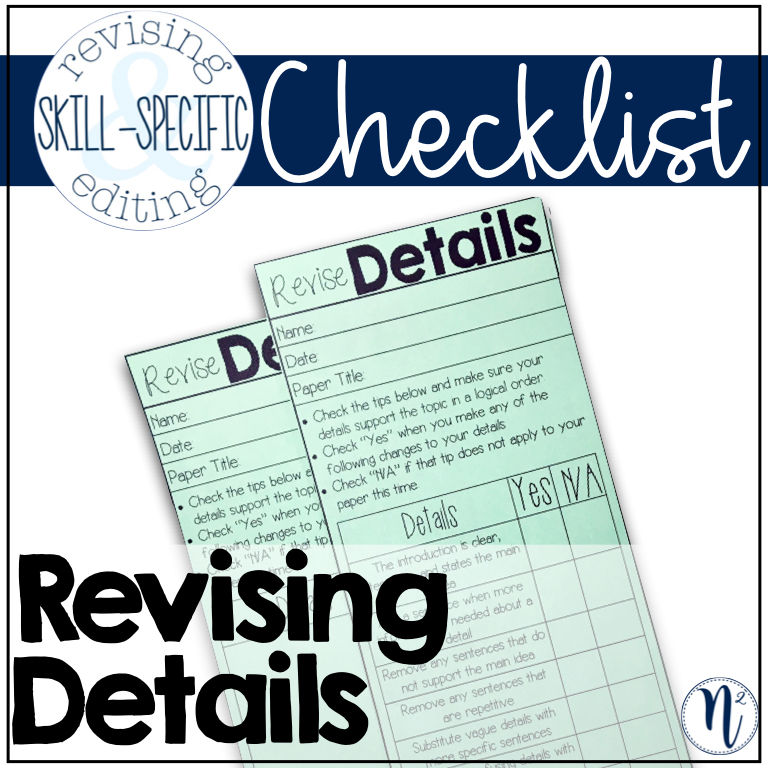
Pair students up to read each other’s writing and use our Revising Details Checklist to give feedback. The checklist helps them focus on structure and flow, not just grammar or spelling.
They can ask questions like:
“Does this sentence fit with the main idea?”
“Would this detail make more sense somewhere else?”
“Is there a spot where I could add more detail?”
Peer revising is especially powerful because students start noticing these issues in their own work, too!
Revising and Editing Practice
Once your students understand how to revise individual paragraphs, it’s time to put it into action.
Our Add, Move, & Remove Sentences: Skill-Specific Revising & Editing Passage gives students a half-page paragraph to improve and answer questions on. They can use the Revision Checklist alongside it to guide their thinking as they read.
It’s a quick, low-stress assessment that helps you see who’s starting to think like a writer and who still needs more practice.

Extend the Learning: Connect Revision to Real Writing
Now that students know what to look for, have them apply those same revision strategies to their own writing.
Here are a few simple ways to do that:
After finishing a draft, ask students to find one sentence to move, one to delete, and one to add.
Let them trade paragraphs with a partner and discuss changes.
Use the Revision Checklist during writing conferences to help guide reflection.
It’s amazing how quickly they start making better revision choices on their own once they’ve practiced the process on its own first!
Building More Confident Writers Through Revising
Revision is where good writing becomes great writing! When students learn how to add, remove, and move sentences with intention, they start taking real ownership of their work.
You don’t need to overhaul your writing block to make it happen. Just a few minutes of focused practice each week can make a big difference.
If you’d like ready-to-go materials, our Revising Paragraph Task Cards, Short Revising and Editing Practice Passage, and Revision Checklist make it easy to teach these skills in a way that clicks for students with no prep required!


Comments